
Riding a motorcycle in a group requires coordination and safety. This guide covers how to prepare, communicate, and ride effectively with others. You’ll learn about pre-ride inspections, formations, and handling different skill levels for a smooth group ride.
Key Takeaways
Proper preparation before a group ride, including detailed motorcycle inspections and wearing appropriate safety gear, is crucial for both personal and group safety.
Effective communication, via a pre-ride meeting and use of hand signals, turn signals, and brake lights, is essential for a smooth, coordinated group ride.
Maintaining correct riding formations and safe following distances, and managing different skill levels within the group, helps ensure a safe and enjoyable ride for everyone.
Preparing for Your Group Ride
Kicking off a motorcycle group ride requires substantial preparation even before you start your engine. A well-maintained motorcycle, proper gear, and readiness upon arrival can greatly influence the journey’s tone. Group riding demands more than just individual readiness; it requires collective preparation to ensure everyone’s safety and enjoyment. As a motorcycle group, it’s essential to prioritize these aspects for a successful motorcycle group riding experience.
Thorough preparation is the cornerstone of a successful group ride. Steps such as performing a pre-ride motorcycle inspection, gearing up with appropriate equipment, and bringing all necessary supplies are fundamental to a successful ride. This preparation phase not only safeguards your personal safety but also contributes to the overall cohesiveness and efficiency of the group.
Conduct a Pre-Ride Motorcycle Inspection
A detailed motorcycle inspection is a must before setting off on a group ride. Here are the key areas to check:
Tire pressure: Underinflated or overinflated tires can affect handling and increase the risk of accidents.
Oil levels: Ensure that your oil levels are adequate to prevent engine issues during the ride.
Brakes: Inspect your brakes to confirm they are functioning properly, as reliable brakes are essential for safe group riding.
Experienced riders, including the experienced rider who often leads the group, demonstrate the importance of these safety checks. By incorporating these inspections into your pre-ride routine, you not only protect yourself but also contribute to the overall safety of the group ride.
Gear Up Properly
Safety gear is more than just a suggestion, it’s a requisite. Here are some essential safety gear items for riders:
Helmet: crucial for protecting your head in case of an accident
Riding gloves: enhance your grip and protect your hands from abrasions
Sturdy jacket: shields you from the elements and road rash
Riding pants: protect your legs
Protective boots: safeguard your feet and ankles
Gearing up properly ensures that you’re protected from head to toe, reducing the risk of severe injuries in case of an accident. It’s a simple yet effective way to prioritize personal safety and set a good example for the rest of the group.
Arrive Prepared
Being prepared extends beyond merely bringing your motorcycle. Ensure your bike has a full tank of gas to avoid any interruptions during the ride. Carry a cellphone for emergencies, as it can be a lifeline in case of unexpected situations. Bringing a first-aid kit is essential for handling minor injuries, and having a tool kit can help address any mechanical issues that arise.
Preparation is key to a smooth group ride. By ensuring you have all the necessary supplies, you can handle potential problems efficiently, allowing the group to stay on course and enjoy the journey.
The Importance of a Pre-Ride Meeting
A pre-ride meeting, far from being a mere formality, is a crucial part of ensuring a safe, organized group ride. This riders meeting allows all riders to discuss:
The ride strategy
Planned stops
Route details
Hand signals
It’s a chance to set ground rules and ensure everyone is on the same page before hitting the road.
During the pre-ride meeting, it’s important to:
Introduce the group ride leader or Road Captain
Exchange cell phone numbers if necessary
Keep the group size manageable, ideally five to seven riders, to maintain cohesion and safety
If the group is larger, break it into sub-groups with designated lead and sweep riders to ensure safety and organization.
Establish Ground Rules
Establishing ground rules is vital for a coordinated, safe group ride. These rules should cover speed limits, route information, and hand signals. Proper hand signals are essential for communicating with other riders and maintaining a consistent riding formation. Adhering to these ground rules promotes group safety and ensures a smooth riding experience.
Ground rules also include group riding procedures for handling mechanical issues and what actions to take if a rider gets separated from the group. By establishing and following these rules, the group can ride with confidence and unity.
Designate Roles
Another important aspect of the pre-ride meeting is assigning roles within the group. Assigning experienced riders as lead and sweep riders ensures better management and safety. The lead rider guides the group and should be familiar with the route and riding conditions. The sweep rider stays at the back to prevent separation and help manage any issues that arise.
These roles are vital for maintaining order and communication within the group. By having designated leaders, the group can navigate more effectively and respond to challenges as a cohesive unit.
Riding Formations and Following Distance
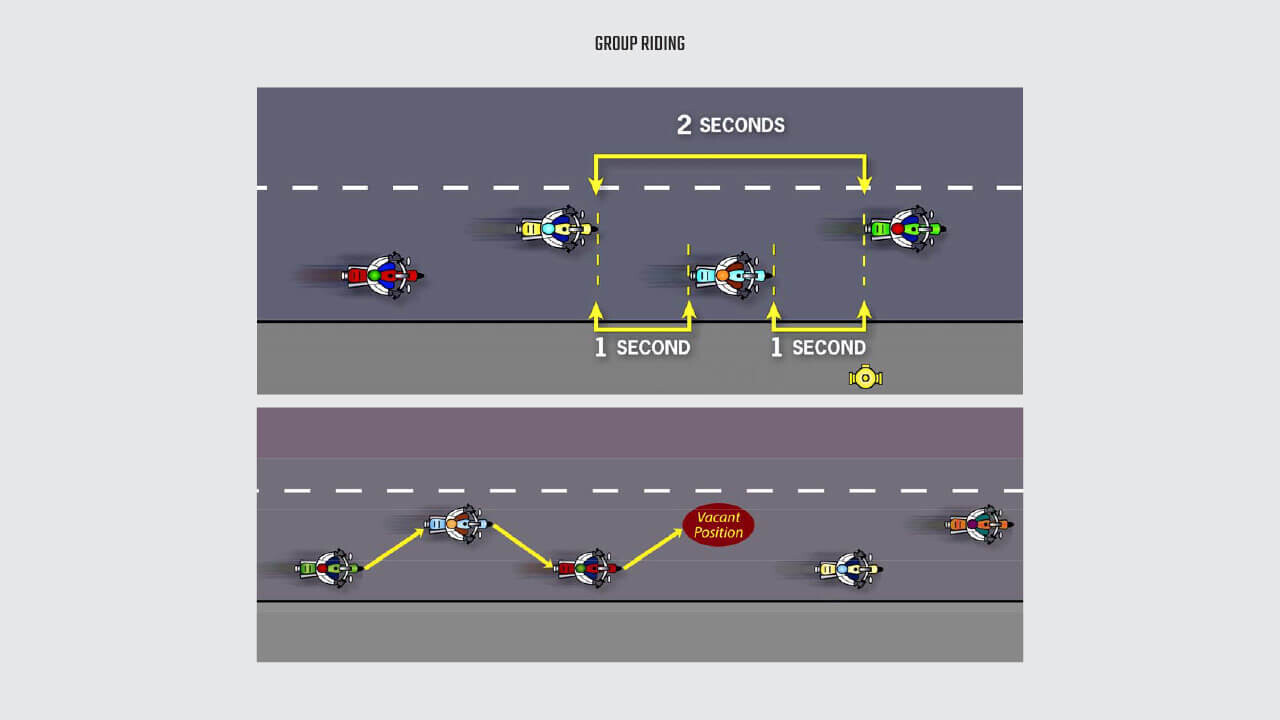
For the group ride’s safety and efficiency, it’s important to maintain correct riding formations and follow distances. Different formations are used for different road conditions and scenarios, ensuring maximum visibility and maneuverability.
A staggered formation is typically recommended for group riding, as it allows for better visibility and space for each rider to maneuver. On curvy roads or in low visibility situations, a single file formation is preferred to ensure safety. Regardless of the formation, maintaining a safe following distance is crucial to prevent collisions and allow for quick reactions to any sudden changes on the road.
Staggered Formation
A staggered formation is ideal for most group riding scenarios. This formation allows enough space for each rider to maneuver and react to hazards safely. The lead rider stays on one side of the lane, while the rider behind stays on the opposite side, creating a left-right pattern.
If a rider leaves during the ride, the group should re-form the staggered formation by criss-crossing into the next vacant position, rather than passing another rider within the lane. This ensures that the formation remains intact and safe.
Single File Formation
Single file formation is recommended in the following situations:
Curvy roads
Low visibility situations
Merging onto multi-lane freeways
Navigating areas that require increased maneuvering room
This formation ensures safety and better maneuverability.
When riding in single file, each rider should keep a minimum two-second following distance from the rider directly ahead. This spacing allows for safe maneuvering and reacting to any sudden changes on the road.
Maintaining Safe Following Distances
Maintaining a safe following distance is crucial to prevent collisions and ensure that each rider has enough time to react to any sudden changes. In a staggered formation, riders should maintain a one-second gap with the rider directly in front and a two-second gap with the rider diagonally ahead in the other column.
In single file formation, the recommended safe following distance increases to a minimum of two seconds behind the rider in front. Adjusting your following distance based on road conditions, visibility, and the riding proficiency of the group members helps maintain safety and coordination.
Communication During the Ride
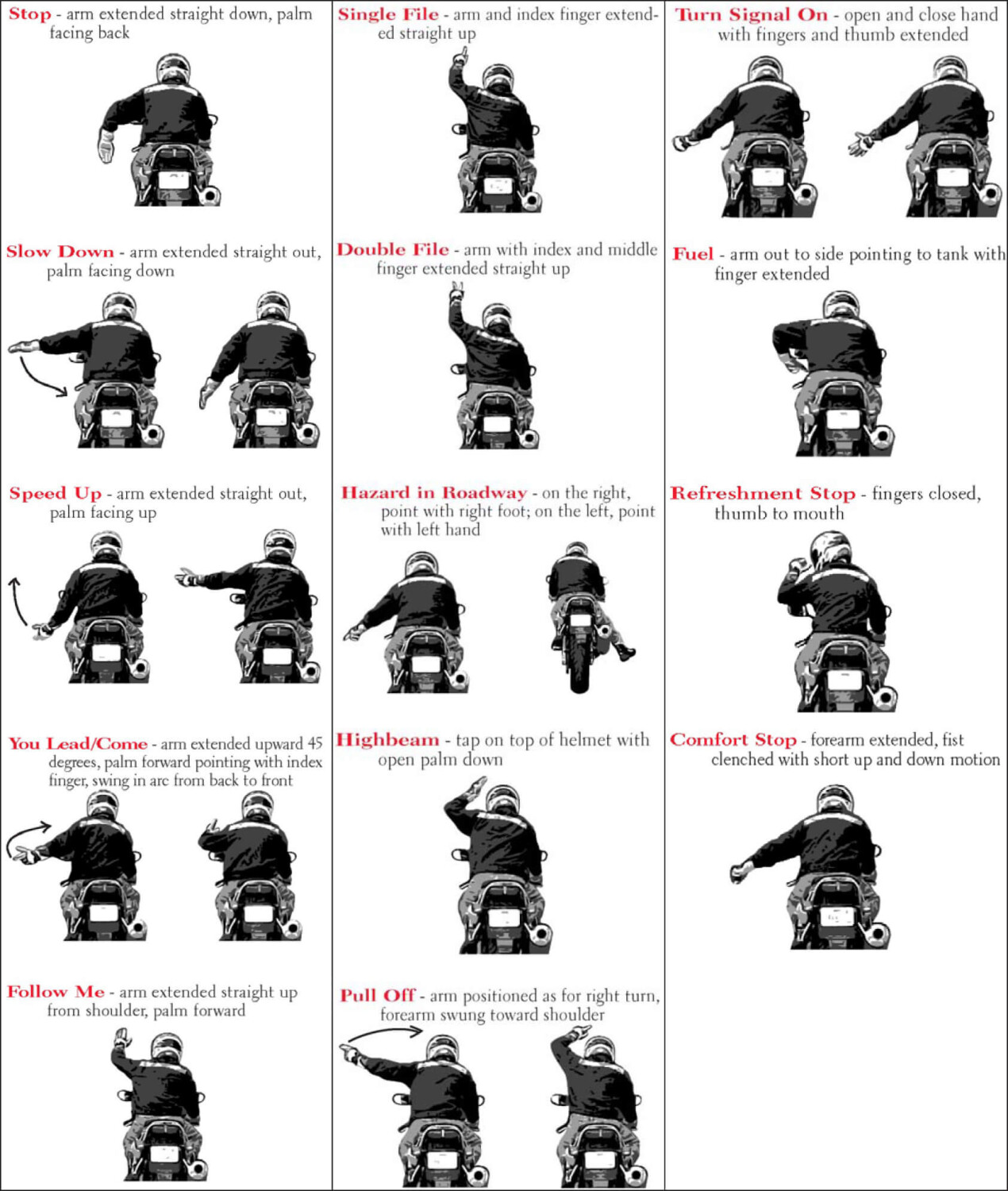
Successful group rides heavily rely on effective communication. Using hand signals, turn signals, and brake lights helps convey essential information and ensures the group operates as a cohesive unit. Proper communication protocols should be established during the pre-ride meeting to ensure everyone is familiar with them.
Hand signals are particularly useful for relaying important information through the noise and chaos of the road. Additionally, using turn signals and brake lights alerts other riders and motorists of your intentions, enhancing overall safety.
Hand Signals
Hand signals are essential for group coordination and safety. Discussing these signals during the pre-ride meeting ensures everyone is familiar with them. Some essential hand signals include indicating turns, lane changes, and pit stops.
By using hand signals, riders can cue the rest of the group to things ahead, ensuring a smooth and coordinated ride. This form of non-verbal communication is crucial for maintaining group integrity and safety.
Using Turn Signals and Brake Lights
Using turn signals and brake lights is a primary method of communication during a group ride. These signals alert other riders and motorists of your intentions, helping to prevent accidents and maintain a smooth flow of traffic.
Signal turns, lane changes, and stops in advance to ensure the riders behind can see and understand your intentions. Proper use of these signals is a key aspect of group riding etiquette and safety.
Managing Different Skill Levels
Handling a mix of skill levels among riders is a frequent challenge in group riding. By strategically positioning less experienced riders and adjusting the pace of the ride, you can ensure that everyone remains comfortable and safe.
Positioning novice riders behind experienced ones allows them to observe and learn proper riding techniques. Additionally, adjusting the speed and taking breaks as needed helps accommodate all riders’ comfort levels and maintain group cohesion.
Positioning Novice Riders
Placing novice riders behind experienced riders has several benefits:
It allows them to follow the path and pace of the more experienced riders.
It helps novice riders learn by observing the techniques of the more experienced riders.
It helps keep novice riders safe by ensuring they are following a trusted and experienced leader.
It’s important to ensure that less-experienced riders know they can stay in their comfort zone and aren’t expected to ride beyond their skill level. This approach fosters a supportive learning environment within the group.
Adjusting Pace and Breaks
Adjusting the pace of the ride and taking regular breaks are essential for accommodating all riders’ comfort levels. If some riders are uncomfortable with the same speed, consider splitting into different speed groups so everyone remains comfortable.
Plan regular breaks for rest, fuel, and regrouping to keep everyone comfortable and safe. Taking frequent breaks helps reduce rider fatigue and maintain alertness, ensuring a safer and more enjoyable ride for all.
Handling Common Group Riding Scenarios
Unique challenges arise in group riding, particularly during common scenarios such as overtaking other vehicles, traversing intersections, and reconnecting with separated riders. Having a strategy for these situations ensures that all riders can handle them safely and efficiently.
Passing other vehicles requires careful planning and clear agreements within the group. Navigating intersections demands extra caution and precise execution of proper procedures. Additionally, having a plan for reuniting separated riders is crucial to maintain group cohesion and safety.
Passing Other Vehicles
When passing other vehicles, it’s important to prepare and stay alert for any merging issues or obstacles. Passing should be done swiftly but safely, spending as little time as possible in the passing lane, especially when the motorcycle is loaded or carrying a passenger.
Riders should pass in small groups of two or three on multi-lane highways and should do so one rider at a time, each ensuring a clear path ahead. This method reduces the risk of accidents and ensures that at least one rider can pass safely.
Navigating Intersections
Intersections are high-risk areas for groups of motorcycles. When proceeding through intersections, do so with great care and only if the intersection is clear of other vehicles. Following the guidelines provided by the Motorcycle Safety Foundation can help ensure a safer ride. When approaching a STOP sign, riders are expected to line up side-by-side, two by two. They should then proceed through the intersection two at a time before returning to the staggered formation as they pull away.
For making left turns at a protected intersection without a left-turn arrow, proceed single-file, with each rider going through the intersection only when it’s safe and legal. This approach minimizes risks and ensures safe navigation through intersections.
What to Do if a Rider Gets Separated
Having a plan in place for reuniting separated riders is essential. If a rider gets separated, follow pre-planned procedures to regroup safely. The group should immediately stop if a rider is missing to avoid adding more space between the group and the lost rider.
The lead rider can slow down or pull over to let all the riders, especially the stragglers, catch up, provided it is safe to do so. Periodically checking the rearview mirrors to ensure no rider is falling behind helps maintain group integrity and safety.
Safety Tips for Group Riding
Adhering to additional safety tips can significantly improve the group riding experience. Avoiding distractions, staying hydrated, and being prepared for emergencies are key aspects of a safe ride.
Maintaining a manageable group size, ideally five to seven riders, helps ensure better safety and cohesion. Periodically checking rearview mirrors to ensure no rider is falling behind is also crucial. Good communication and knowing your limits are essential for group riding etiquette.
Avoiding Distractions
Focusing on the ride and communicating only essential information helps avoid creating additional distractions and risks. Make sure to periodically check the rearview mirrors to ensure no rider is falling behind. If needed, slow down to keep the group together.
Staying focused is crucial while riding in a group to maintain safety and coordination. This practice ensures that all riders can react swiftly to any unexpected situations on the road.
Keeping Hydrated and Energized
Taking breaks to drink water and eat snacks is essential for maintaining energy levels during a group ride. Scheduling regular breaks helps riders stay hydrated and energized, reducing the risk of fatigue.
Carrying water bottles and energy snacks ensures that all riders can maintain their energy levels throughout the ride, contributing to a safer and more enjoyable experience.
Emergency Preparedness
Being prepared for emergencies is crucial for personal safety. Carry essential items such as licenses, registration documents, proof of insurance, and helpful extras for safety and comfort.
For medical or mechanical issues, having a cell phone to call for assistance can be a lifesaver. This preparedness ensures that riders can handle unexpected situations efficiently and safely.
Recap and Final Thoughts
In conclusion, the keys to an enjoyable group riding experience are prioritizing safety, fostering communication, and emphasizing preparation. By following the basics of group riding etiquette and ensuring proper preparation, riders can greatly enhance their group riding experience.
Good communication among group riders is crucial for maintaining coordination, avoiding misunderstandings, and ensuring everyone’s safety. By practicing sensible riding habits and thorough preparation, groups can ensure a safe, enjoyable, and memorable riding experience.
Summary
To sum up, group motorcycle riding is a thrilling and rewarding experience when done correctly. Preparation, communication, and safety are the pillars of a successful group ride. By adhering to the guidelines provided, riders can enjoy the camaraderie and adventure of group riding while ensuring everyone’s safety.
Remember, the road is a shared space, and riding in a group requires cooperation and mutual respect. By following these tips, you can make your next group ride not only safe but also unforgettable.
Frequently Asked Questions
Why is a pre-ride meeting important?
A pre-ride meeting is important because it allows riders to discuss the ride strategy, planned stops, route details, and hand signals, ensuring safety and organization for everyone on the ride.
What should I inspect on my motorcycle before a group ride?
Before a group ride, make sure to inspect your tire pressure, oil levels, and brakes to ensure your motorcycle is in top condition. Be safe out there!
How should novice riders be positioned in a group ride?
Novice riders should be placed behind experienced riders to follow their path and pace, allowing them to learn and stay safe. This position provides a good learning experience and ensures safety.
What should I do if a rider gets separated from the group?
If a rider gets separated from the group, the group should follow pre-planned procedures to regroup safely and stop immediately to avoid adding more space between the group and the lost rider.
Why is it important to use hand signals during a group ride?
Using hand signals during a group ride is important because they help communicate vital information despite the noise and chaos of the road, ensuring the group operates cohesively.